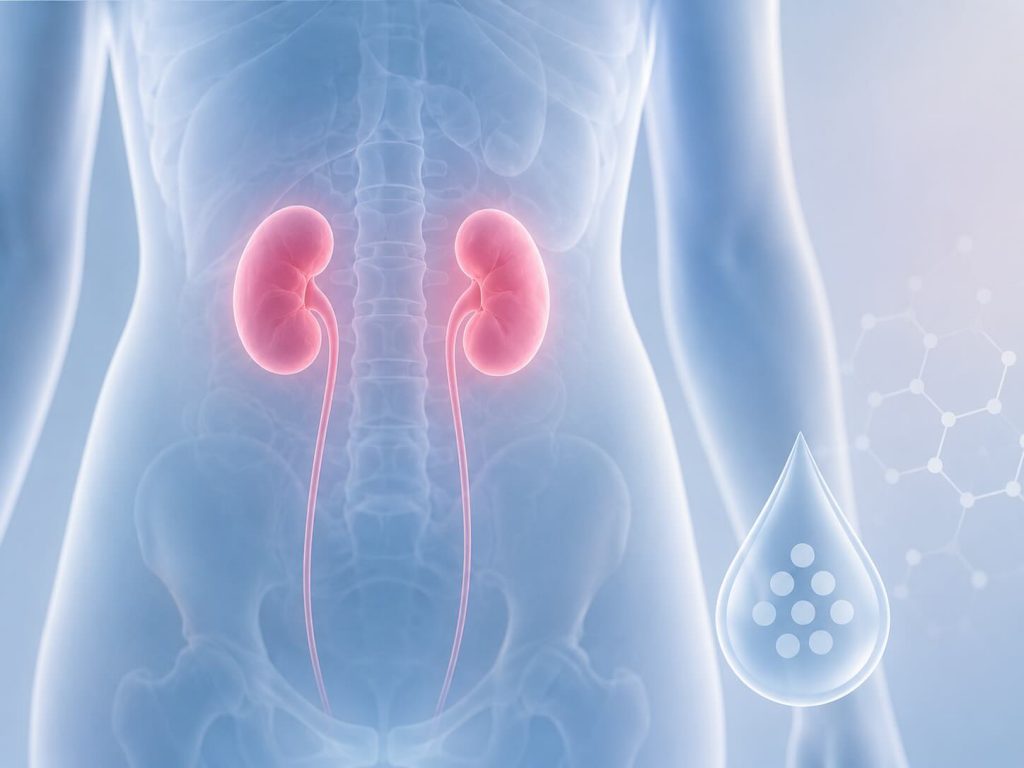
Approximately 40% of people with diabetes will develop some form of kidney disease during their lifetime, according to the National Institute of Diabetes and Digestive and Kidney Diseases (NIDDK). That number alone defines the scale of the problem, yet the majority of those patients will spend years without a single obvious symptom. The kidneys are built with enormous reserve capacity, meaning they continue functioning well even as significant structural damage accumulates. By the time a person with diabetes notices something is wrong, kidney function may already be reduced by 50% or more. This is the core reason early warning signs deserve serious attention, not as a precaution, but as a clinical priority.
Type 1 and Type 2 diabetics face the same underlying risk, though the timeline differs. In Type 1, kidney involvement typically becomes detectable within 10 to 15 years of diagnosis. In Type 2, damage may already be present at the time of diagnosis, since many patients live with uncontrolled blood sugar for years before the condition is identified. In both cases, the kidneys are absorbing the consequences of elevated glucose levels long before any outward sign appears.
| CKD Stage | eGFR (mL/min/1.73m²) | Kidney Function | Typical Status in Diabetic Patients |
|---|---|---|---|
| Stage 1 | 90 and above | Normal or high | Damage present, no symptoms, protein may appear in urine |
| Stage 2 | 60–89 | Mildly reduced | Still largely asymptomatic, detectable only through lab testing |
| Stage 3 | 30–59 | Moderately reduced | Fatigue, swelling, and blood pressure changes may begin |
| Stage 4 | 15–29 | Severely reduced | Significant symptoms, dialysis planning typically begins |
| Stage 5 | Below 15 | Kidney failure | Dialysis or transplantation required |
How Diabetes Damages the Kidneys?
The kidneys contain approximately one million tiny filtering units called glomeruli. Each glomerulus is a cluster of small blood vessels responsible for filtering waste from the blood while retaining proteins and essential nutrients. Chronically elevated blood glucose forces these vessels to work under increased pressure and chemical stress. Over time, the vessel walls thicken, lose flexibility, and begin to leak, allowing proteins, particularly albumin, to pass through into the urine instead of being retained in the bloodstream.
This process, known as diabetic nephropathy, follows a predictable progression. In the early stage, the kidneys actually increase their filtration rate, a compensatory response that masks the damage taking place. As glomerular scarring advances, filtration slows. The kidneys lose their ability to regulate fluid, electrolytes, and waste products efficiently. Blood pressure rises as a consequence, which accelerates the damage further. Left unaddressed, this cycle ends in end-stage renal disease requiring dialysis or transplantation.
Early Warning Signs to Watch For
The physical signs of kidney damage in diabetic patients are easy to attribute to other causes, fatigue gets blamed on poor sleep, swelling on a long day on your feet. Recognizing these signs in the context of diabetes changes their significance entirely.
- Foamy or bubbly urine. Persistent foam in the toilet after urination is one of the earliest visible indicators of protein leaking into the urine. Occasional foam from forceful urination is normal foam that stays and appears consistently is not.
- Swelling in the ankles, feet, or legs. As the kidneys lose their ability to regulate sodium and fluid balance, excess fluid accumulates in the tissues. Ankle and lower leg swelling that appears without an obvious physical cause warrants investigation.
- Fatigue that doesn’t improve with rest. Declining kidney function leads to the buildup of metabolic waste in the blood and a reduction in erythropoietin production, the hormone that drives red blood cell formation. The result is a form of anemia-driven fatigue that sleep doesn’t fix.
- Frequent nighttime urination. The kidneys’ reduced ability to concentrate urine forces the body to produce larger volumes throughout the night. This shift in urination pattern, especially when new, is a signal worth discussing with a physician.
- Rising blood pressure without a clear cause. The kidneys play a central role in blood pressure regulation through fluid and sodium management. As their function declines, blood pressure tends to rise and becomes harder to control with existing medications.
When Symptoms Are Still Silent: The Role of Testing
The most dangerous phase of diabetic kidney disease is the one with no symptoms at all. In Stage 1 and Stage 2 nephropathy, patients feel completely normal while measurable damage is already progressing. This is why laboratory testing, rather than symptom tracking, serves as the actual first line of detection.
Two tests are central to early identification. The first is a urine albumin-to-creatinine ratio (UACR), which measures how much protein is escaping into the urine. A result above 30 mg/g on two separate tests over three months meets the clinical threshold for early kidney disease. The second is an estimated glomerular filtration rate (eGFR), calculated from a blood creatinine level and adjusted for age, sex, and body size. An eGFR below 60 indicates that kidney function has fallen below the midpoint of normal range, at which point intervention becomes urgent.
The American Diabetes Association recommends annual UACR and eGFR screening for all adults with Type 2 diabetes starting at diagnosis, and for adults with Type 1 diabetes after five years. In California, the 2026 Medi-Cal Managed Care guidelines reinforce this as a required quality measure for diabetic members, meaning most insured patients in the state have access to these tests at no out-of-pocket cost.
How Diabetic Kidney Disease Is Treated?
Treatment for diabetic nephropathy is determined by a nephrologist or endocrinologist based on the stage of kidney involvement and the patient’s overall metabolic profile. There is no single-drug approach – effective management requires addressing multiple mechanisms simultaneously.
The foundation of pharmacological treatment is blood pressure control. ACE inhibitors such as Lisinopril and ARBs such as Losartan are prescribed as first-line agents because they reduce pressure inside the glomeruli directly, slowing the rate of filtration damage independent of their blood pressure-lowering effect. These medications are continued long-term regardless of whether blood pressure readings normalize.
SGLT2 inhibitors, including Farxiga and Jardiance, have become a standard addition to nephropathy treatment protocols following results from multiple large-scale trials demonstrating their ability to slow eGFR decline and reduce the risk of kidney failure. The ADA 2026 Standards of Care now include SGLT2 inhibitors as a recommended component of treatment for patients with diabetic kidney disease and eGFR above 20.
When blood pressure targets are not reached with a single agent, physicians add a second or third medication to the regimen, which increases both the complexity and the cost of ongoing treatment. Several of these prescription drugs, including ACE inhibitors and ARBs, are available through Arecov Mexican Pharmacy, which provides access to a wide range of affordable medications for American patients managing chronic conditions long-term.
For patients with persistent albuminuria despite ACE inhibitor or ARB therapy, finerenone, a non-steroidal mineralocorticoid receptor antagonist, has shown additional kidney and cardiovascular protection in clinical trials and is increasingly prescribed alongside existing regimens.
Risk Factors That Accelerate Kidney Damage
Not every diabetic patient develops nephropathy at the same rate. Several factors significantly increase both the likelihood of developing kidney disease and the speed at which it progresses.
- Poor long-term blood sugar control. HbA1c levels consistently above 7% correlate directly with faster glomerular damage. Each percentage point reduction in HbA1c reduces the risk of microvascular complications, including nephropathy, by approximately 37%, according to findings from the UK Prospective Diabetes Study.
- Uncontrolled hypertension. Blood pressure above 130/80 mmHg accelerates glomerular scarring independently of blood glucose. Many patients with diabetic nephropathy require two or more antihypertensive medications to reach target levels.
- Long duration of diabetes. The longer a patient has lived with elevated glucose whether managed or not the greater the cumulative structural damage to the glomeruli. Duration is one of the strongest independent predictors of nephropathy progression.
- Smoking. Tobacco use reduces blood flow to the kidneys, raises blood pressure, and independently accelerates the decline in eGFR in diabetic patients. Smokers with diabetes face a significantly higher rate of progression to end-stage renal disease compared to non-smokers with the same metabolic profile.
- Obesity and physical inactivity. Excess body weight drives insulin resistance, raises blood pressure, and increases systemic inflammation all of which compound the stress on kidney filtration units.
What to Do If You Notice These Signs?
Any diabetic patient who identifies one or more of the warning signs described above should schedule a physician appointment within days not weeks. The visit should include a urine albumin test, a serum creatinine draw for eGFR calculation, a full metabolic panel, and a blood pressure assessment. If these tests have not been completed within the past year, they are overdue regardless of symptoms.
Patients in California have access to nephrology referral pathways through most major insurer networks, including Kaiser Permanente, Blue Shield of California, and Covered California plans. A referral to a nephrologist is appropriate when eGFR falls below 45 or when UACR exceeds 300 mg/g both thresholds that indicate moderate to severe kidney involvement requiring specialist management.
Alongside clinical steps, patients who receive an early nephropathy diagnosis should work with their care team to tighten glycemic targets, optimize blood pressure management, and evaluate cardiovascular risk. SGLT2 inhibitors a class of diabetes medication have demonstrated kidney-protective effects in multiple large-scale trials and are now incorporated into standard treatment guidelines for patients with diabetic kidney disease. Dietary adjustments, including sodium reduction and controlled protein intake, also carry documented benefit at every stage of progression.
The Case for Early Action
Diabetic nephropathy caught in Stage 1 or Stage 2 is a condition that can be meaningfully slowed and, in some cases, partially reversed with aggressive intervention. The same disease caught at Stage 4 leaves patients with far fewer options and a trajectory toward dialysis that is difficult to alter. The difference between those two outcomes often comes down to whether testing happened before symptoms appeared. For people living with diabetes, that single decision to test early and test regularly carries more clinical weight than almost any other aspect of self-management.
Research & References
- Diabetic Kidney Disease — https://www.kidney.org/kidney-topics/diabetic-kidney-disease
- Diabetes and Chronic Kidney Disease — https://www.cdc.gov/diabetes/diabetes-complications/diabetes-and-chronic-kidney-disease.html
- High Blood Pressure and Kidney Disease — https://www.niddk.nih.gov/health-information/kidney-disease/high-blood-pressure
- Albuminuria — https://www.kidney.org/kidney-topics/albuminuria-albumin-urine
- Insulin Resistance and Prediabetes — https://www.niddk.nih.gov/health-information/diabetes/overview/what-is-diabetes/prediabetes-insulin-resistance
- Chronic Kidney Disease Overview — https://www.mayoclinic.org/diseases-conditions/chronic-kidney-disease/symptoms-causes/syc-20354521
- Kidney Health Evaluation for Patients with Diabetes — https://www.ncqa.org/report-cards/health-plans/state-of-health-care-quality-report/kidney-health-evaluation-for-patients-with-diabetes-ked/